Why a Proper Garage Door Opener Install Actually Matters
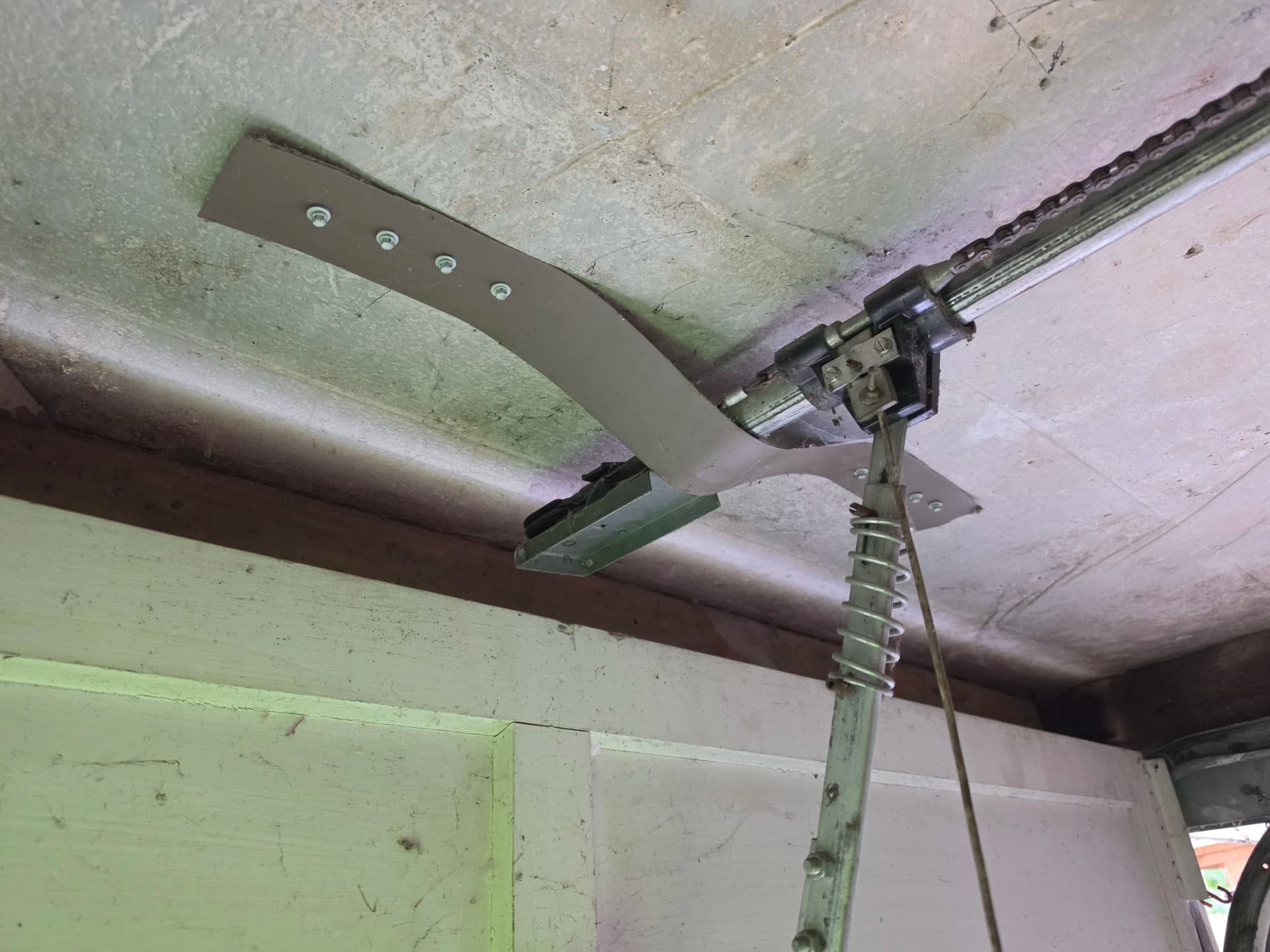
We run into opener setups from time to time that were never installed the way the manufacturer intended. Wrong bracket placement, improper header bracket positioning, hardware that's just barely holding things together. It's more common than people think - and most homeowners have no idea anything is wrong until the opener starts acting up or stops working altogether.
Here's the thing: a garage door opener that's installed off-spec puts extra stress on every moving part. The motor works harder than it should. The trolley and arm take on load they're not designed to handle at that angle. Over time, that means more wear, more noise, and a shorter lifespan for the whole system.
When we install an opener, we follow factory specs closely. The header bracket goes where it's supposed to go. The arm and trolley are aligned properly. Hardware is torqued down and positioned so the system runs the way it was designed to run. It sounds basic, but getting those details right is what separates a smooth, reliable opener from one that gives you grief every few months.
Beyond performance, there's a real safety angle here too. An opener that's fighting a bad install can put stress on the door itself, and in worst-case scenarios, that creates risks you don't want to deal with. Doing it right the first time just removes that variable entirely.
If your opener has been sluggish, noisy, or just feels like it's working too hard, it's worth having someone take a look at how it's set up - not just the opener itself, but the full installation. Sometimes the fix is simpler than expected.